ServicesWater testing
Water Testing in Coppell
Before anyone puts equipment under your sink or in your garage, you should know what is in your water. We take careful samples, read the results with you and tell you plainly whether you need a filter, a softener or nothing at all.
Know what is in your water first
Most city water in our area meets federal and state drinking water rules. That does not tell you what comes out of your own tap. Water can pick up metals from old pipes and fittings, taste strongly of disinfectant, or leave scale and stains that point to minerals. A test shows which of these, if any, applies to your home.
We test first because it is the safe way to work. It keeps you from buying equipment you do not need, and it keeps us from guessing. If the results are clean, we say so and leave it there.
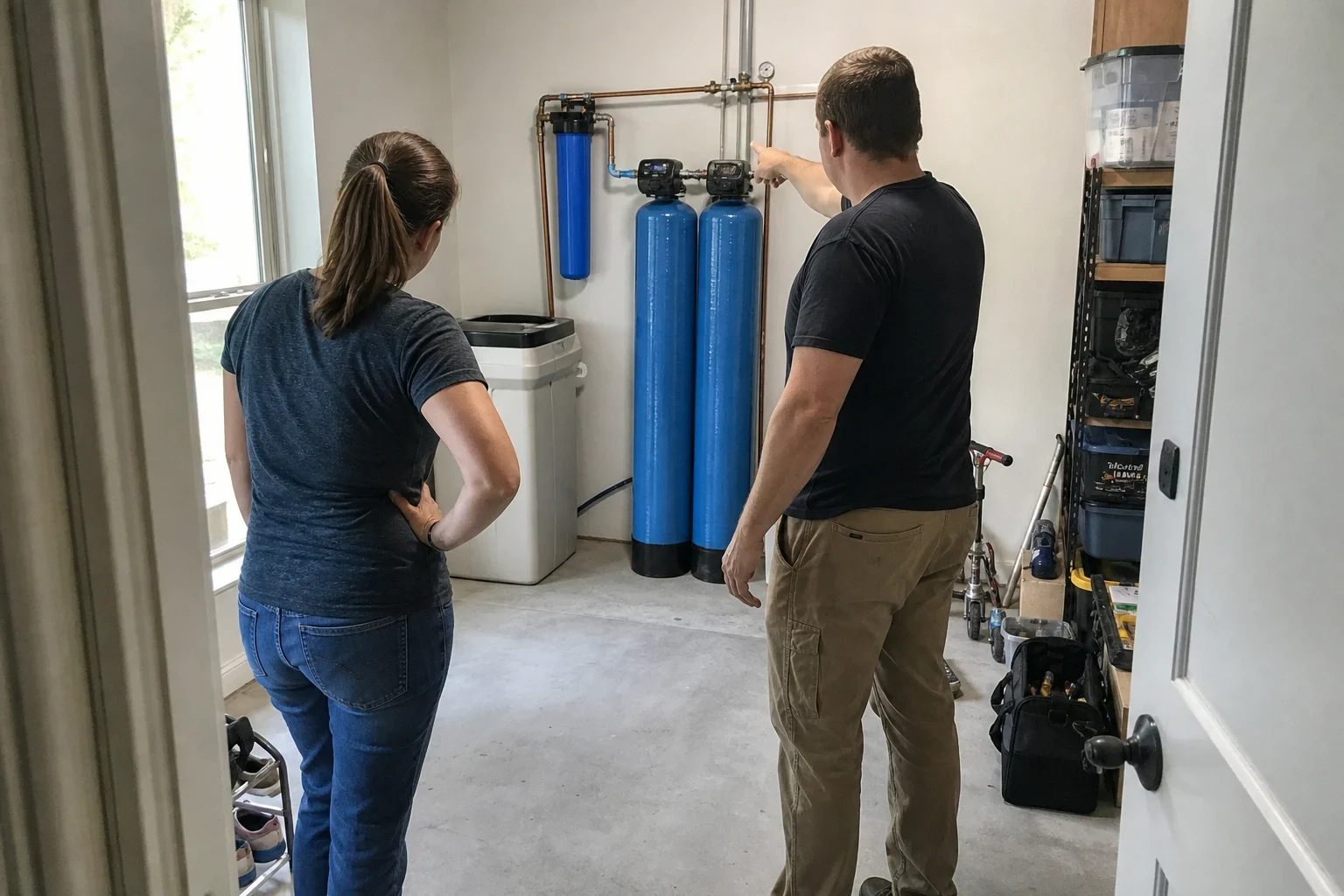
When a number does come back high, it tells us which fix fits. A disinfectant taste at every tap calls for one answer. Metals showing up at the kitchen sink call for another. We match the equipment to the result, whether that turns out to be whole-house carbon filtration, under-sink reverse osmosis, iron and sediment filtration, or a softener when hardness truly runs high.
What a water test covers
- 01
Hardness
We measure calcium and magnesium. This is the number that decides whether a softener makes sense in your home. Plenty of homes do not need one.
- 02
Chlorine and taste
We check disinfectant levels at the tap. It is a common reason people dislike their water, and it is easy to fix once you know the level.
- 03
Lead and copper
Older faucets, fittings and solder can add metals after water leaves the main. We sample the way the test calls for, often first-draw water that sat in the pipes overnight, so the result means something.
- 04
Iron and sediment
Orange stains, grit in aerators or cloudy water can mean iron or sediment. We check for both before suggesting iron and sediment filtration.
- 05
pH and dissolved solids
These tell us how your water may treat your plumbing and how well a given filter will work on it.
- 06
A plain written summary
You get the results in writing with each number explained in everyday words. We mark what is normal and what is worth fixing.
Questions about Water testing?
Call(972) 498-1761Signs it is time to test your water
Older plumbing or fixtures
Original faucets, old fittings or pipes nobody has looked at in years can add lead to your water. Checking for it is a sensible step. It matters most with young children or someone pregnant in the house.
A chlorine or pool smell
A strong bleach smell at the kitchen tap or in the shower usually means disinfectant. Testing tells us how much and whether carbon filtration is worth it.
Stains, spots or scale
White crust on faucets, spots on glasses or rust-colored rings in sinks tell us minerals or iron are present. A test shows which one.
A salesperson told you that you need a system
Before you sign for anything, get independent numbers. If the problem is real, the test will show it.
Water that suddenly changed
New cloudiness, color or taste after plumbing work or a water main repair is worth checking rather than ignoring.
How a water test works
- 1
Short phone call
You tell us what you notice and how old the plumbing is. We decide together which tests make sense so you do not pay for ones you do not need.
- 2
Careful sampling
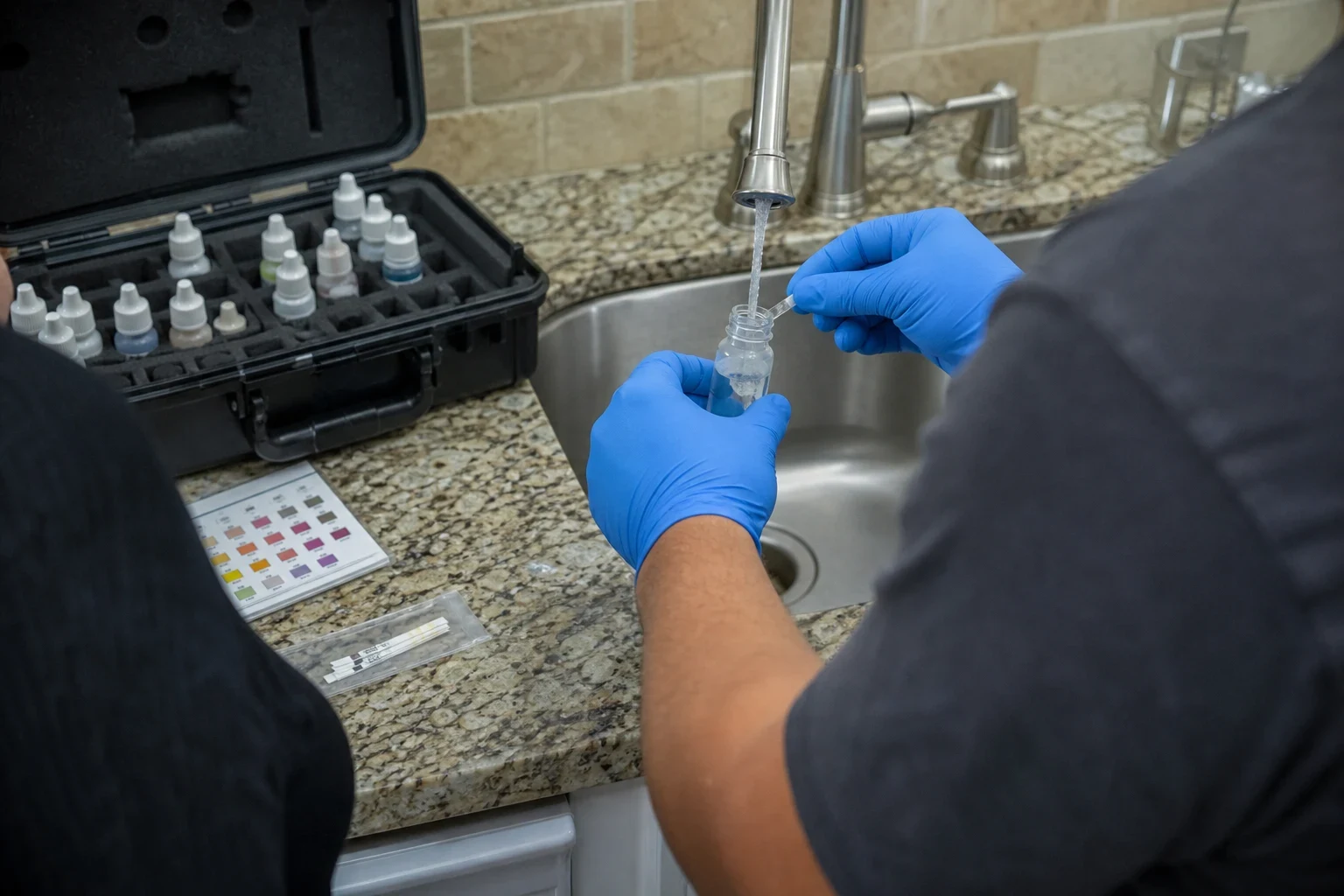
We come to your home and take samples from the right taps in the right order. We wear gloves, use clean sealed bottles and follow the sampling steps each test calls for. Nothing gets shut off and nothing gets taken apart.
- 3
On-site and lab results
Some readings, like hardness and chlorine, we can show you on the spot. Tests such as lead go to a lab, and we call you when those results are back.
- 4
Straight answer
We walk through every number with you. If your water is fine, we tell you. If it is not, we explain the fix that matches the result and what it involves, with no pressure to decide that day.
What sets the price of a water test
You pay for the tests your water calls for, not a fixed bundle. A quick hardness and chlorine check runs lower than a full panel with lab work for metals. On the phone, we go over what each test costs before anything goes on the calendar.
- Number of tests
- A quick taste and hardness check is simple. Adding lead, copper, iron and other items adds to the cost.
- Lab work
- Tests that go to an outside lab cost more than readings we take at your home, and they take longer to come back.
- Number of taps sampled
- Testing one kitchen tap is different from sampling several fixtures to track down where a metal is coming from.
- Follow-up testing
- If you install a filter, a second test afterward confirms it is doing its job. That is optional and priced separately.
What people ask us about testing
The city already checks its water. Why test mine?
The utility samples at the plant and at points around its system, and the water generally passes. Those samples are taken before the water ever reaches your service line. Your faucets, fittings, old solder and even the water heater can change it on the last stretch to your glass. Only a sample from your own tap shows that part.
Is the test just a way to get me to buy equipment?
No. We test first so the numbers decide, not a sales pitch. If everything looks normal, we tell you and pack up. If something does need attention, we explain the options and you can think it over as long as you like.
Do I need a water softener?
Nobody can say without a hardness reading from your home. A lot of homes simply do not have hard enough water to make one worth it. If your result runs high, we can talk about water softeners. If it does not, you will hear that from us too.
How long do results take?
Readings like hardness, chlorine and pH are usually done before we leave. Lead and other metals go out to a lab, so those take longer. When the lab sends them back, we call and walk you through each number.
Do I need to do anything before you come?
For a lead test, the water should sit unused in the pipes for several hours, often overnight. We give you the exact steps when we set the date. Beyond that, just clear a path to the kitchen sink and any other taps you have questions about.
Get real numbers before you buy anything
A test is the safe first step for your home and your family. Call, tell us what you are noticing, and we will set up the right tests.