ServicesIron and sediment filtration
Iron and Sediment Filtration in Coppell
Rusty rings in the tub, sand in the faucet screens, murky water after a line repair. We start with a test to learn what your water carries, then put a filter on the main line that stops it before it gets to your fixtures and appliances.
What this filter does and when it makes sense
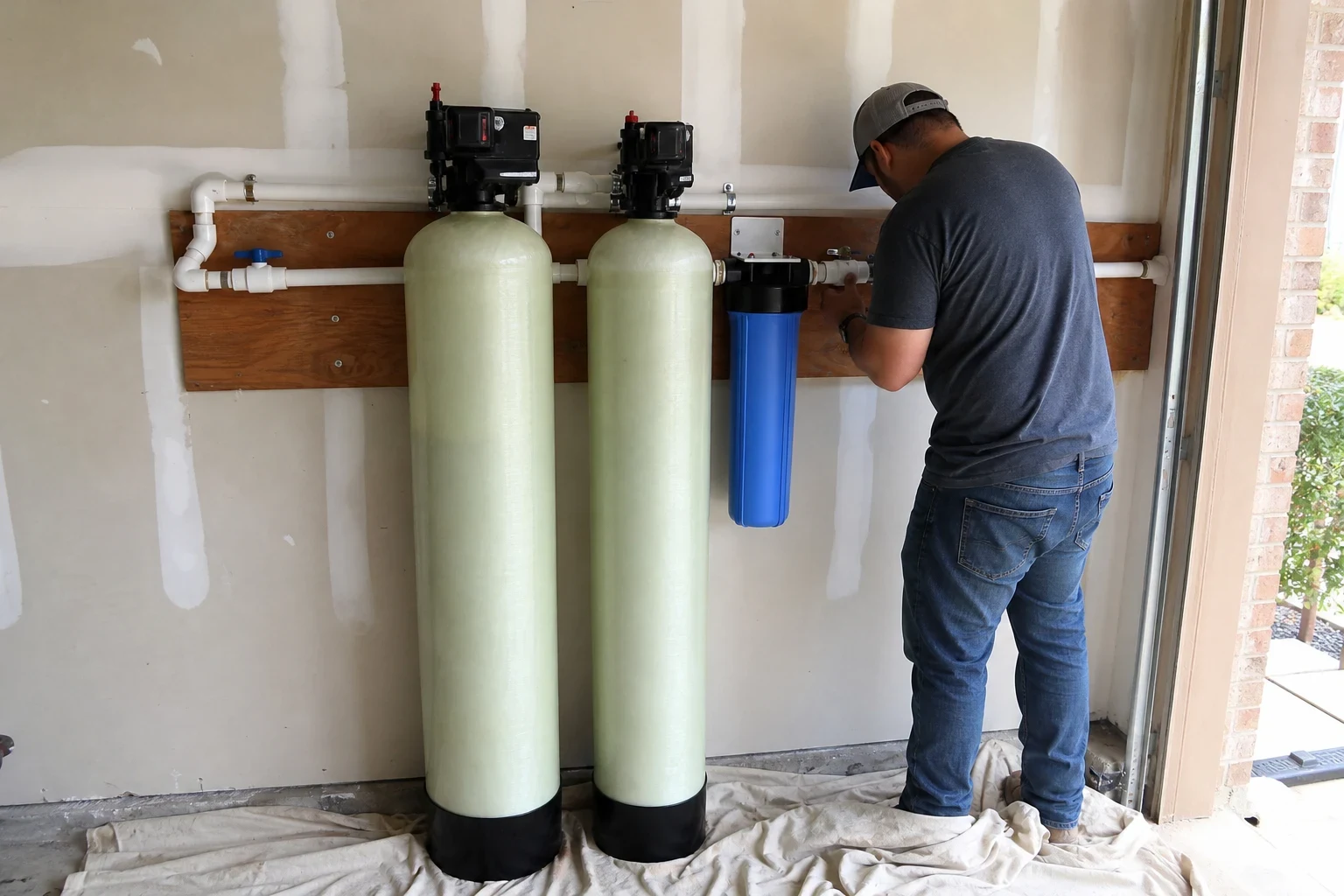
Iron and sediment filtration takes out the solid stuff in your water. That means sand, pipe scale, rust flakes and dissolved iron that turns orange once it hits air. A sediment filter catches particles. An iron filter changes dissolved iron into a solid it can trap, then flushes it out.
Treated city water usually carries little iron. So when a home has rust stains or grit, the cause is often something inside the house or on the street, like aging galvanized pipe, a water heater shedding scale, or a nearby main break. We test before we sell anything. Sometimes a simple sediment cartridge is all you need. Sometimes the right fix is a plumber, not a filter, and we will tell you that.
When a filter is the right call, we put it where the water enters your home so every tap, the shower and the water heater get the benefit.
What the job includes
- Water test before any quote
- We check iron, turbidity and pH, and look at the sediment you are seeing. The numbers decide the equipment, not a sales sheet.
- Filter sized to your flow
- An undersized filter drops your water pressure. We size it to your bathroom count and peak use so the shower still runs strong when the dishwasher is on.
- Bypass valve on every install
- You can shut the filter off and keep water running to your home. That matters on filter change day and if anything ever needs service.
- Pressure and leak check
- We check pressure before and after, then watch every fitting under full flow before we leave. A slow drip behind a garage wall is how water damage starts.
- Flush and cleanup
- We flush new media to drain so loose fines do not end up in your aerators. We protect the floor where we work and take the old parts and packaging with us.
When rust or grit is showing up in your water
Orange marks on porcelain
Iron leaves a reddish-orange ring wherever water sits, like the toilet bowl or around the tub drain. It can also turn up on white towels and on the driveway where the sprinklers hit.
Sand in the aerators
Unscrew a faucet tip and look at the screen. Specks of sand or dark flakes caught there mean particles are riding along with your water.
A hazy or brownish glass
Fill a clear glass and hold it to the light. A haze, or a faint brown or yellow cast that is worse after the water sits overnight, points to fine particles or iron that has already oxidized.
Appliances wearing out early
Sediment plugs the inlet screens on washers, dishwashers and ice makers. It also builds up in the bottom of the water heater, where it shortens the tank's life.
Other filters plugging fast
If your whole-house carbon filtration or under-sink reverse osmosis cartridges clog well before their normal change date, a sediment prefilter can take that load off them.
How the work goes
- 1
Phone call and test
You tell us what you are seeing. We come out, test the water and look at your main line and water heater.
- 2
Straight answer and written estimate
We explain what the test found and what will fix it. You get a line-item estimate. If the problem is a failing pipe, we say so.
- 3
Install day
We shut off water at the main and tell you how long it will be off. Most installs take part of a day. We set the filter, add the bypass and seal every joint.
- 4
Restart, flush and walk-through
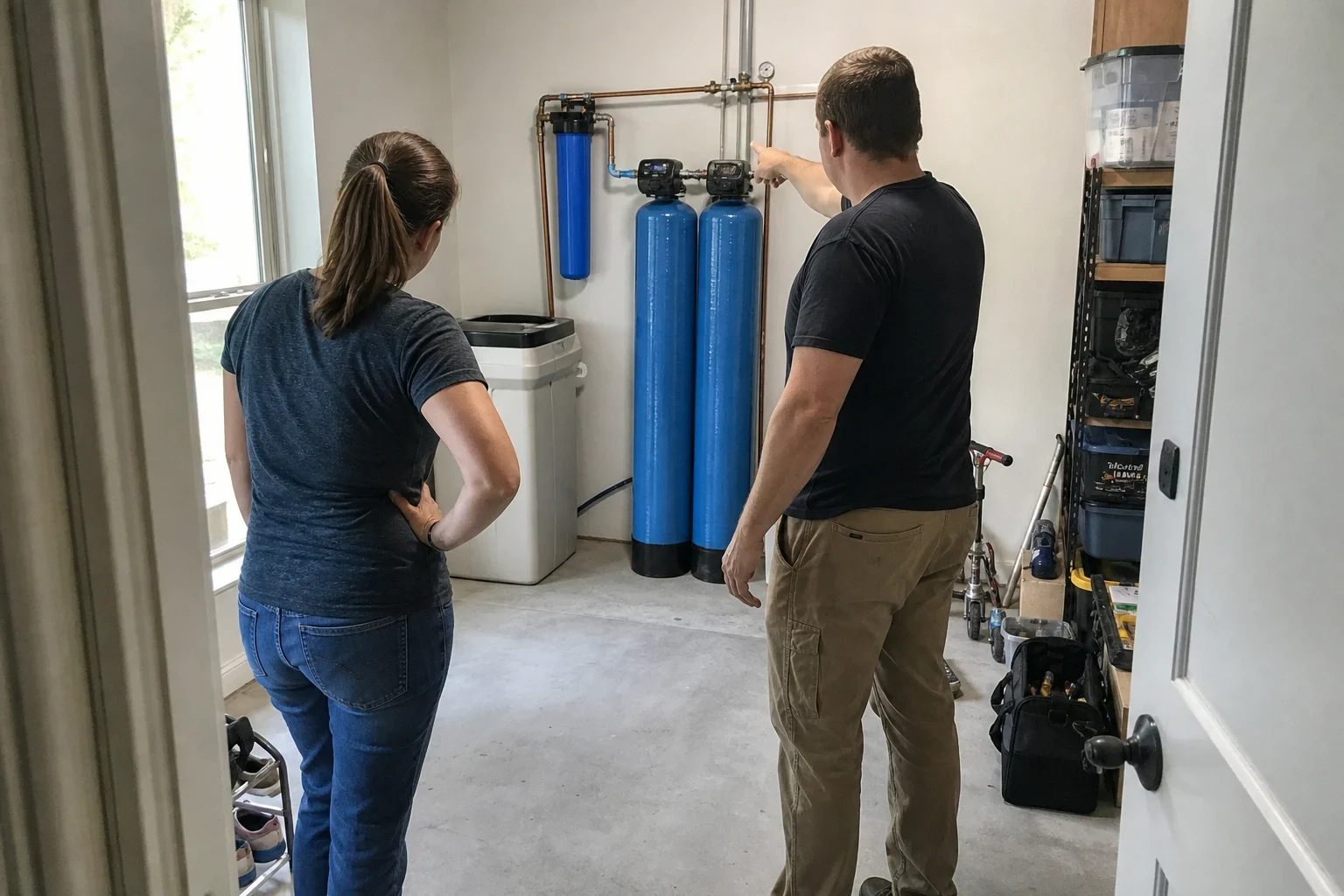
We bring water back slowly to avoid pressure spikes, flush the system and watch for leaks. Before we pack up, you learn how to work the bypass valve and what signs mean the filter is due for service.
What moves the price
The cost comes down to what is in your water and how hard it is to get to your main line. A basic sediment housing is a small job. A backwashing iron filter is a bigger one. We give you the price in writing after the test, before any work starts.
- Iron level and type
- If the test shows only light iron or loose sand, a cartridge housing usually does the job. Heavier iron calls for a media tank that cleans itself on a backwash cycle.
- Size of your home
- More bathrooms and higher flow need a larger filter to keep pressure up.
- Where the main line is
- An open garage wall is easy. A line in a tight closet or behind finished drywall takes more labor.
- Drain and power
- Backwashing filters need a drain nearby and sometimes an outlet. Adding either changes the scope.
Common questions about iron and sediment filters
Something not covered here? (972) 498-1761
Is iron in my water a health concern?
In most homes, iron is more of an annoyance than a danger. It stains fixtures, can give water a metal taste and shortens appliance life. Our test shows the amount, and we give you the reading so you can decide.
If I see rust, are my pipes going bad?
Not necessarily. A street main break can kick up sediment that clears in a day or two. Rust that shows up more on the hot side often traces to the water heater, and rust at just a few faucets can point to old pipe on that run. Testing and a look at your plumbing narrow it down, and if a plumber would fix it better, we say so.
Would a water softener work instead?
Possibly not. A softener treats hardness and may remove a bit of iron, but it is not built for sand or scale. We suggest a water softener only after a hardness test shows your home calls for one.
Does a filter reduce water pressure?
A properly sized filter should not cause a noticeable drop. Low pressure after an install usually points to a filter that is undersized or due for a change. We check pressure before and after so you can compare.
How much service does it need?
Sediment cartridges are typically changed a few times a year, or more if your water is especially gritty. A backwashing iron filter largely takes care of itself on a timer, but it still needs an occasional check. Our filter replacement and maintenance service covers both.
Will I have water during the work?
The water goes off for part of the install. We let you know before we shut it and give you a rough idea when it will be back. With the bypass installed, future filter changes seldom require turning off water to the whole house.
Get the rust and grit sorted out
Give us a call, describe the stains or grit you keep finding, and we will pick a time to test your water. You hear what we found and see a written estimate before anything gets installed.