ServicesWater softeners
Water Softeners in Coppell, After a Hardness Test
A softener is only worth buying if your water is hard enough to need one. So we measure hardness at your tap first, show you the reading and size a unit for your home. If the reading says skip it, we say so and suggest what fits better.
Test first, then decide
A softener does one job. It swaps the calcium and magnesium that cause scale for sodium or potassium. That helps with white crust on fixtures, spotty dishes and a water heater that slowly fills with mineral buildup. It does nothing for chlorine taste, lead or most other worries people call about.
So the first step is a hardness reading in grains per gallon. If the number is low, a softener is money spent on salt. If it's high enough to cause real scale, we'll explain the size, the salt use and where it goes in your home before you commit to anything.
We work the safe way on every install. Water off, pressure relieved, a proper drain connection and a leak check before we leave.
What a softener install includes
- 01
Hardness and iron reading
We test at the tap before anything else. Iron matters too, because a lot of it can foul a softener's resin, and that changes what we recommend.
- 02
Sizing to your household
We work from your grains-per-gallon reading, how many people live with you and how many bathrooms you have. Too small, and the unit cycles constantly and burns through salt. Too big, and you pay extra for capacity you never use.
- 03
Bypass valve and shutoffs
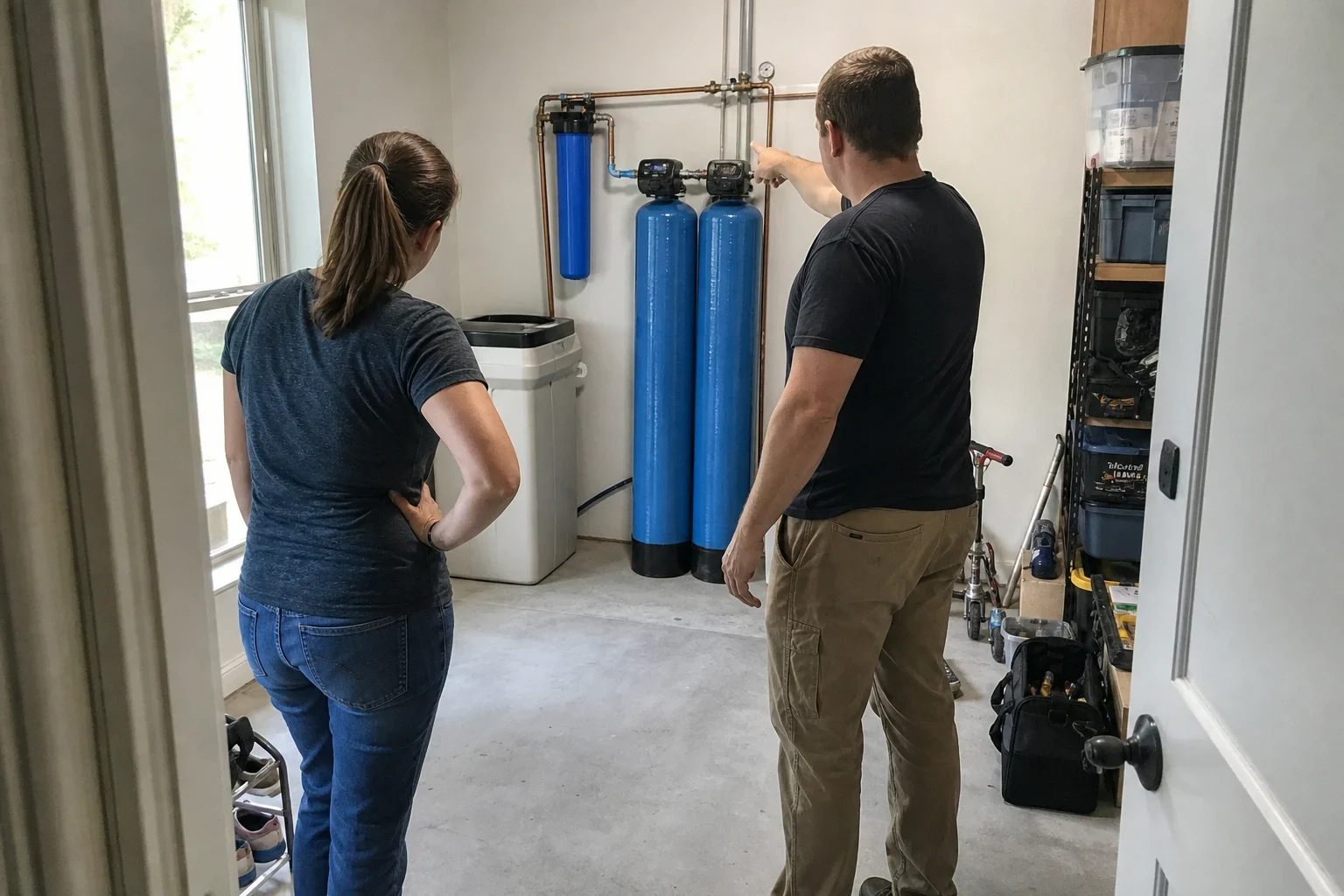
Every install gets a bypass so you can take the softener offline without shutting water to the house. We show you how it works before we go.
- 04
Drain line with an air gap
The regeneration discharge goes to a drain through a proper air gap. That keeps wastewater from ever being pulled back into your supply, which is a basic safety step some installers skip.
- 05
Kitchen drinking water option
Softened water carries a little added sodium. If anyone at home watches their salt intake, we can leave the kitchen cold line unsoftened or pair it with under-sink reverse osmosis.
- 06
Cleanup and leak check
We protect the floor where we work, pressure test every joint and haul off packaging. You get a short rundown on salt and settings.
Questions about Water softeners?
Call(972) 498-1761Signs hard water may be the problem
White crust on faucets and showerheads
Chalky buildup that comes back weeks after you scrub it is the classic sign of mineral scale.
Spots and film on dishes
Glasses come out of the dishwasher cloudy even with rinse aid. Hard water is often the cause, though detergent can be too.
Water heater noise or short life
A tank that pops or rumbles while it heats often has a layer of mineral grit sitting on its floor. The burner or element then has to push heat through that layer, which wears the heater out sooner.
Soap that won't lather
Shampoo and soap need more to suds up, and skin can feel tight after a shower.
You just aren't sure
Plenty of people call because a salesperson told them they need a softener. That's exactly when a test is worth doing before you buy.
From first reading to finished install
- 1
Reading your water
Before any talk of equipment, we measure hardness and look for iron. We go over the numbers with you and say plainly whether a softener is worth it.
- 2
Written estimate
If it makes sense, you get a written estimate with the unit size, install parts and any plumbing changes listed line by line.
- 3
Install day
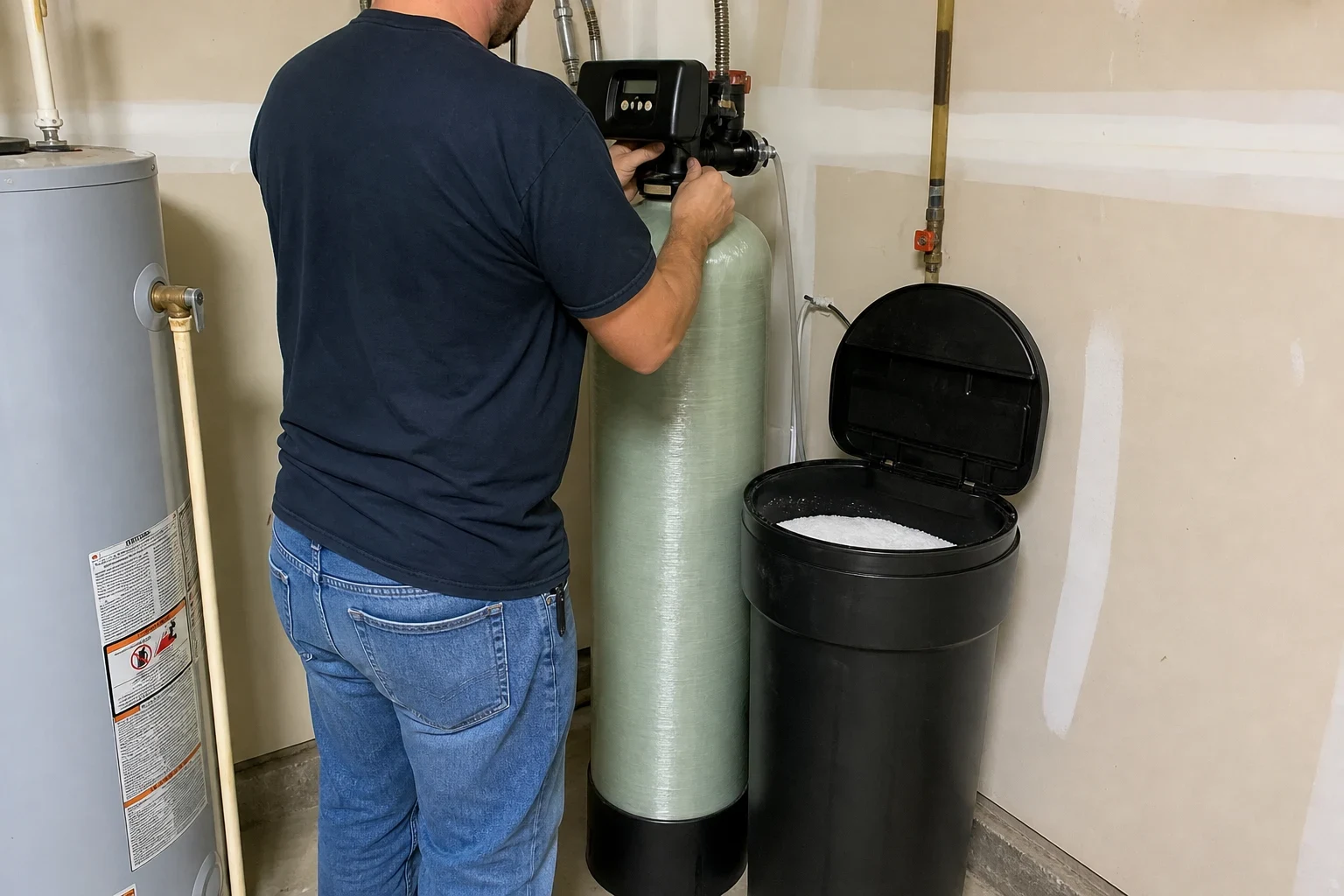
We shut off the main, relieve pressure and cut in the softener with a bypass. Most installs go in the garage near where the main line enters, close to a drain and an outlet.
- 4
Startup and safety check
We fill the resin tank slowly, set regeneration for your household, then check every connection for leaks under full pressure. Water is back on the same visit.
- 5
Walkthrough
We show you the bypass, how much salt to add and how to keep the brine tank clean. Ongoing care is covered under filter replacement and maintenance if you'd rather we handle it.
What moves the price
Price comes down to the unit you need and the work it takes to put it in safely. We don't quote until we've tested your water and seen the install spot. Your estimate lists each part so nothing shows up later.
- Your reading and who lives there
- More grains per gallon and more people using water call for a bigger tank. Those two numbers set the unit size more than anything else.
- Install location and plumbing
- A garage with the main line, a drain and an outlet nearby is simple. If we need to run a drain line, add an outlet loop or reroute pipe, it takes more parts and time.
- Iron or sediment in the water
- If the test shows iron or grit, a prefilter may be needed to protect the resin. Our iron and sediment filtration page covers that.
- Kitchen bypass or RO add-on
- Leaving a drinking tap unsoftened or adding reverse osmosis adds plumbing work, and we'll price it separately.
Softener questions we hear
Do I really need a softener in Coppell?
Maybe. Hardness varies, and we'd rather measure it than guess. If your number is low, we'll tell you to skip it. If scale is clearly building up, a softener is worth a look.
Is softened water safe to drink?
For most people, yes. It does carry a small amount of added sodium. If someone at home is on a low-salt diet, we can keep the kitchen tap unsoftened or add under-sink reverse osmosis.
Will a softener fix chlorine taste?
No. A softener only removes hardness minerals. For taste and odor, whole-house carbon filtration is the right tool, and the two can work together.
How much upkeep is there?
You add salt to the brine tank, usually every month or two depending on use. Every so often the brine tank needs a cleanout. We can do that as part of filter replacement and maintenance.
Where does the waste water go?
During regeneration the unit flushes a small amount of salty water to a drain. We connect it through an air gap so nothing can siphon back into your lines.
Find out what your water actually needs
Start with a hardness test. We'll show you the number and give you an honest answer on a softener, sizing and safe placement in your home.