ServicesFilter replacement
Filter Replacement and Maintenance in Coppell
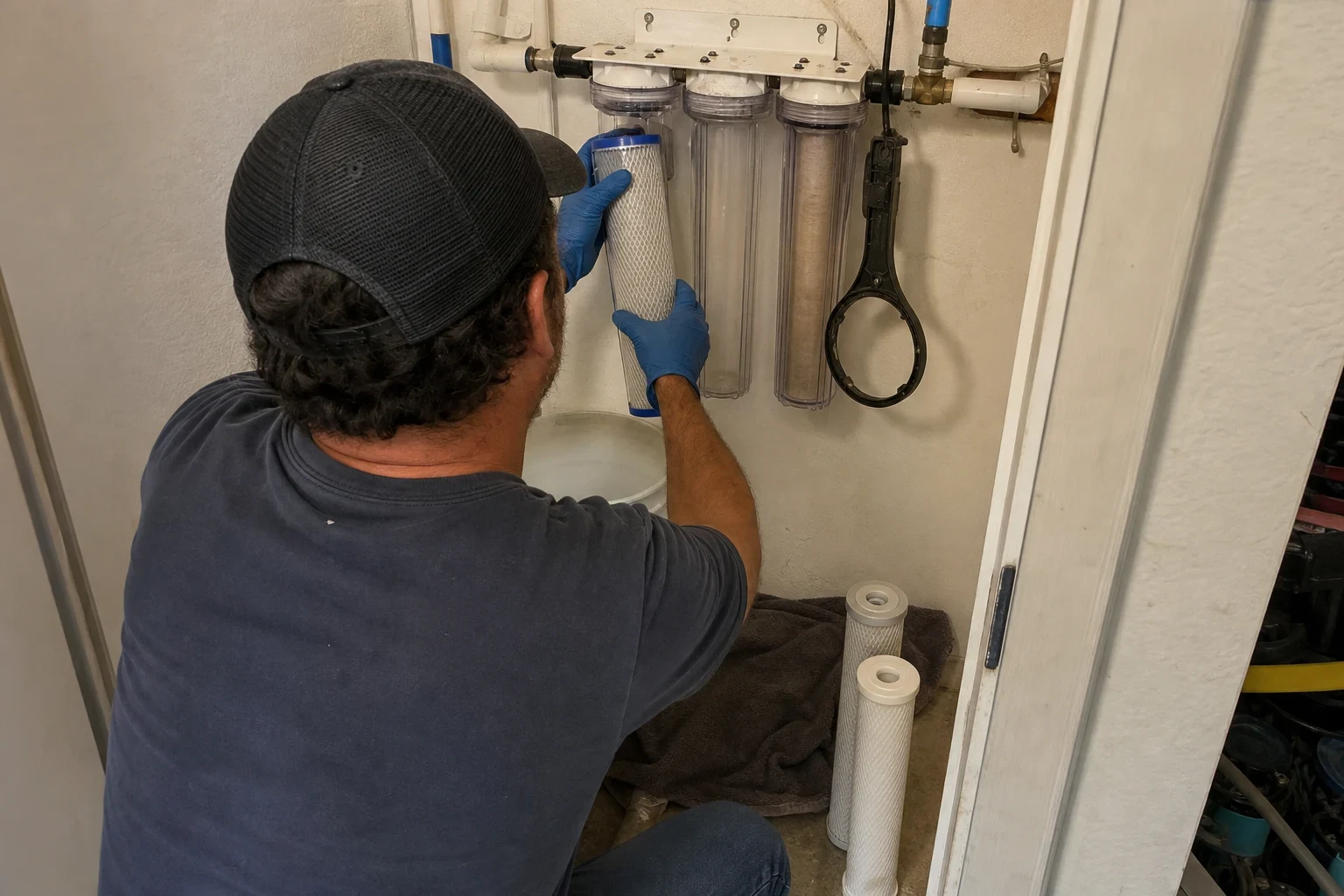
A filter that is past its life can slow your water, let taste and odor back in, or start to grow buildup inside the housing. We change cartridges, clean and sanitize what holds them, and check every fitting for leaks before we pack up.
What a Filter Change Should Actually Cover
Dropping in a new cartridge is the easy part. The parts that matter are shutting the water off the right way, relieving pressure before a housing is opened, cleaning out the sump, and seating a sound O-ring so nothing weeps later. Skip those and a new filter can sit in a dirty housing or drip slowly into a cabinet.
We service the systems most homes have: whole-house carbon tanks and cartridge housings, sediment and iron prefilters, and under-sink reverse osmosis units. If you have a system we did not install, that is fine. We look at it, tell you what it needs, and work on it the same careful way.
What We Do on a Maintenance Visit
Safe shutoff and pressure release
We close the supply or set the bypass valve, then bleed pressure before any housing comes off. A pressurized housing can spray water or crack when forced. This step keeps your floors dry and the plastic intact.
Cartridge and media replacement
Spent sediment, carbon and RO cartridges come out and fresh ones go in, matched to your system. On whole-house carbon tanks we tell you whether the media is due or still has life left.
Housing cleaning and sanitizing
Sumps get washed and sanitized before the new cartridge goes in. On reverse osmosis units we sanitize the storage tank and lines, which is easy to skip and matters for drinking water.
O-ring and fitting check
We inspect each O-ring for flat spots, cracks or stretch and replace worn ones. A light coat of food-grade lubricant helps them seal without pinching.
Leak test and flush
We bring the water back slowly, flush the new filters per the maker's instructions and watch every joint under pressure. We leave the area dry and take the old cartridges with us.
Dated service label
Each housing gets a label with the date and what was changed. You can see at a glance when the next visit is due.
Signs Your Filters Are Due
Water pressure has dropped
A clogged sediment or iron prefilter chokes flow to the whole house. If showers feel weaker than they did a few months ago, start there.
The old taste or smell is back
Carbon stops grabbing chlorine once it is used up. When tap water starts tasting like a pool again, the carbon is spent.
Slow RO faucet or a tank that never fills
Fouled prefilters or a tired membrane slow reverse osmosis production to a trickle.
Discolored or slimy housings
Brown, orange or dark film inside a clear sump means the cartridge is loaded and the housing needs cleaning, not just a swap.
Drips or damp spots near the unit
When a housing weeps, the cause is often a tired seal or a hairline crack in the plastic. Even a slow drip can soften a cabinet floor or stain drywall over a few months, so we look at these before anything else.
Nobody knows when it was serviced
An unmarked housing with no record behind it is a safe bet for overdue. Most cartridges are rated in months, not years.
How the Visit Goes
- 1
Quick talk by phone
Tell us the brand printed on the housing, or just describe what it looks like, and let us know what has changed with your water. A model number lets us bring the right cartridges and O-rings on the first trip.
- 2
Look before we open anything
On arrival we find the shutoffs, check for existing leaks or damage, and lay down towels and drop cloths. If a housing is cracked, we tell you before we touch it.
- 3
Change, clean and sanitize
Water off, pressure released, old cartridges out. Housings get cleaned and sanitized, new filters and O-rings go in, and RO tanks and lines get sanitized when due.
- 4
Pressure test and walk-through
We restore water slowly, flush and watch for leaks. Then we show you what came out, point out anything worth watching, and note the next service date.
What Sets the Price
The price depends mostly on your system and how many cartridges it uses. We tell you the cost of parts and labor before we start, so there is nothing to sort out after. If we find a problem that needs more than a filter change, you decide whether to fix it then or later.
- Type and number of filters
- A single sediment cartridge costs less than a multi-stage RO unit with a membrane, or a whole-house carbon tank that needs new media.
- Brand and cartridge size
- Some systems take common sizes. Others need brand-specific parts that cost more.
- Condition of the housings
- Cracked sumps, stuck housings or worn O-rings add parts and time. Housings that sit in hot garages through North Texas summers tend to wear faster.
- Sanitizing and extra work
- A full RO sanitize or a heavily fouled housing takes longer than a standard swap.
- Access
- Units tucked behind a water heater or deep in a crowded cabinet take more time to service safely.
Common Filter Service Questions
Something not covered here? (972) 498-1761
How often should my filters be changed?
Each cartridge carries its own rating, and a household of five uses them up quicker than two people do. Sediment prefilters often go a few months, carbon and RO prefilters are on a similar timeline, and RO membranes last far longer. We follow the maker's rating plus what we find inside the housing, then write the date on a label.
Is it okay to change them on my own?
Lots of homeowners do, and we are happy to show you how during a visit. The common mistakes are opening a housing that is still under pressure, reusing a flattened O-ring or skipping the sanitizing. Each one can lead to a leak or a dirty sump that undoes the fresh filter.
Do you work on systems someone else installed?
We do. We service most common brands of whole-house, prefilter and under-sink RO systems. If a part is tough to get, we let you know ahead of the visit instead of leaving a housing open.
Does someone have to be home, and how long is the water off?
We need someone there to let us in. The water is typically off briefly while the housings are open. We give a heads-up before shutting it so nobody is in the shower or running the dishwasher.
Why do my filters clog so quickly?
The cartridge may have the wrong micron rating for your water, or the water may carry more sediment or iron than the system was designed to handle. Water testing shows what is really there. Based on that, we might recommend a better prefilter or iron and sediment filtration.
Due for a Filter Change?
Describe your setup and what has changed with your water, and we will bring the right parts, do the work safely and leave the area dry. We serve Coppell and nearby towns like Carrollton, Lewisville and Flower Mound.