ServicesUnder-sink reverse osmosis
Under-Sink Reverse Osmosis in Coppell
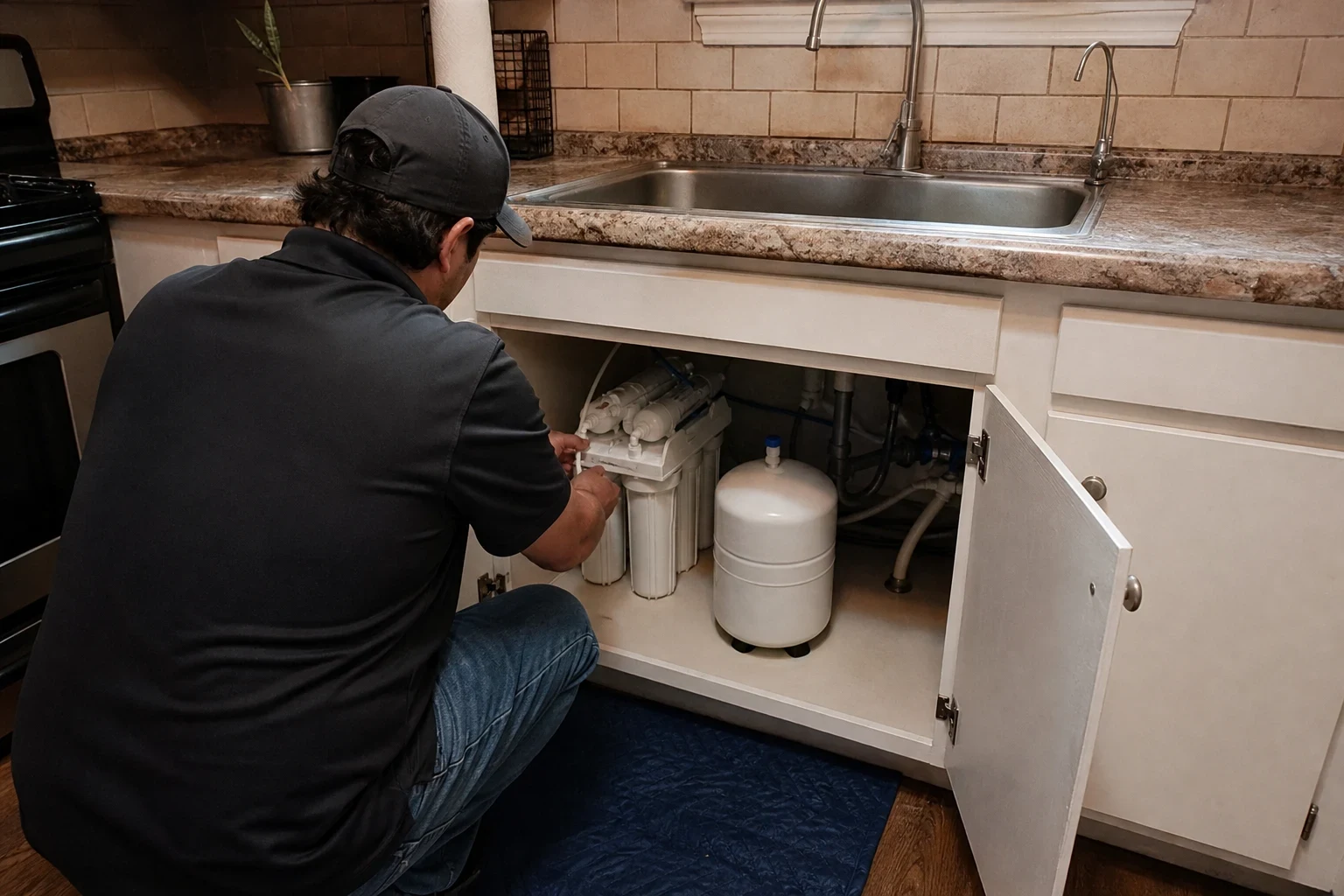
Our under-sink RO puts four or five stages of filtering between your tap and the glass you drink from. We take our time around your plumbing, check every joint for leaks twice and leave the cabinet dry and clean when we go.
What an Under-Sink RO System Does
Reverse osmosis pushes your tap water through a very fine membrane. Most dissolved solids stay on one side and get rinsed down the drain. Clean water goes to a small storage tank and then to its own faucet on your sink.
It is the right call when you want better water for drinking, coffee, ice and cooking, not for showers or laundry. It also makes sense in an older house where the pipes or fixtures could add lead between the street and your glass. If the whole house tastes or smells of chlorine, whole-house carbon filtration may fit better, and we will tell you so.
Safety comes first on every install. A leak under a sink can soak a cabinet floor for weeks before anyone sees it, so we treat each fitting like it matters, because it does.
What the Install Includes
A water reading first
We take a total dissolved solids reading from your tap before we start. That number gives us a baseline to compare against when the system is running.
Sediment and carbon prefilters
These catch grit and chlorine before they reach the membrane. If your water is treated with chloramine, we use a carbon stage rated for it so the membrane lasts.
The membrane and storage tank
We mount the tank where it will not crowd your trash can or cleaning supplies. We set the tank air pressure before filling it, so flow at the faucet stays steady.
A dedicated faucet with an air gap
The drinking faucet goes in an existing sink hole or a new one in the counter. We use an air gap on the drain line so waste water can never siphon back into the system.
A clean drain connection
The reject line ties into the sink drain above the trap with a drain saddle. Placed right, it stays quiet and keeps drain water away from the clean side.
Flushing and a final check
We flush the new filters, run the tank through a full cycle and take a second reading at the RO faucet. You see both numbers before we pack up.
When a Drinking Water System Is Worth It
Your pantry is stacked with bottled water
Lots of families switch to bottles because the tap tastes off. A dedicated RO faucet at the sink usually means you can stop hauling cases home.
A test showed lead at the tap
Lead most often comes from older solder, fittings or fixtures inside a house. RO is one of the most effective ways to reduce it in drinking water.
Coffee and ice taste flat or chemical
Chlorine and dissolved minerals show up in clear drinks first. Cloudy ice cubes are a common clue.
White spots on glasses and kettles
Those chalky marks are minerals left behind when water dries. The membrane strips out the bulk of that load before it ever reaches your glass.
You want extra assurance for a baby or a sick family member
City water meets federal rules, but some families want another layer for formula or for someone with a weak immune system. That is a fair reason, and RO handles it well.
How the Day Goes
- 1
Look under the sink and talk it through
We check the shutoff valves, the drain, the space and the counter. Old shutoffs that will not close fully get pointed out before anyone touches them.
- 2
Shut off and protect
We close the cold water supply, open the faucet to relieve pressure and lay a mat and towels on the cabinet floor. Anything stored under the sink gets set aside.
- 3
Mount and connect
We mount the filter housing and tank, tap the cold line with a feed valve, fit the faucet and air gap and connect the drain saddle. Each tubing joint gets cut square and seated fully.
- 4
Flush, pressurize and check for leaks
We turn the water back on slowly, flush the filters and fill the tank. We check every joint with a dry paper towel, then check again after the tank fills.
- 5
Show you the system
You get the before and after readings, a look at which filter is which and the change schedule. We wipe out the cabinet and take the packaging with us.
What Moves the Price
Most installs are straightforward, but no two sinks are set up the same. We look at your sink first. Then you get a written estimate with each part and task on its own line, and nothing gets cut or drilled until you say yes.
- The system you choose
- A basic system with a storage tank sits at the lower end. Tankless models, or units that put a little calcium and magnesium back for taste, cost more.
- Your countertop
- Using an existing sprayer or soap hole is simple. Drilling a new hole in granite or quartz takes special bits and more time.
- Plumbing condition
- Corroded shutoff valves or an old drain may need replacing so the system can connect safely.
- Extra lines
- Running RO water to your refrigerator or ice maker adds tubing and fittings, and sometimes work behind the fridge.
Common Reverse Osmosis Questions
Something not covered here? (972) 498-1761
Does RO send a lot of water down the drain?
A certain amount, since the membrane needs constant rinsing to stay clear. How much depends on the model and your water pressure. Newer systems waste much less than older ones, and we will compare models for you before you pick.
Why does the RO faucet pour slower than my main faucet?
It pulls from a small storage tank, so it runs slower than a regular kitchen faucet. It still fills a glass or pot without trouble. If the flow weakens over time, the filters or tank pressure usually need a look.
Does RO water taste flat?
Some people find it tastes very clean, close to plain. If you want a little more flavor, we can add a remineralizing stage after the membrane to return a small amount of minerals.
How often are the filters replaced?
Sediment and carbon stages usually last six to twelve months, and the membrane lasts well beyond them. How much water your household uses sets the actual timing, and our filter replacement and maintenance service keeps you on track.
Will it fit if I have a garbage disposal?
In most cases, yes. We position the tank and housing around the disposal and run the drain line so it stays out of the way. If the space is really cramped, we let you know before starting.
Is it smart to test my water before buying?
Yes, it helps. Water testing shows what your water really contains, so you pay for the system you need and no more.
Ready for Better Drinking Water
Give us a quick rundown of your sink setup and what you dislike about your tap water. We will come look, lay out the choices in plain terms and do a careful install if RO is a good match.